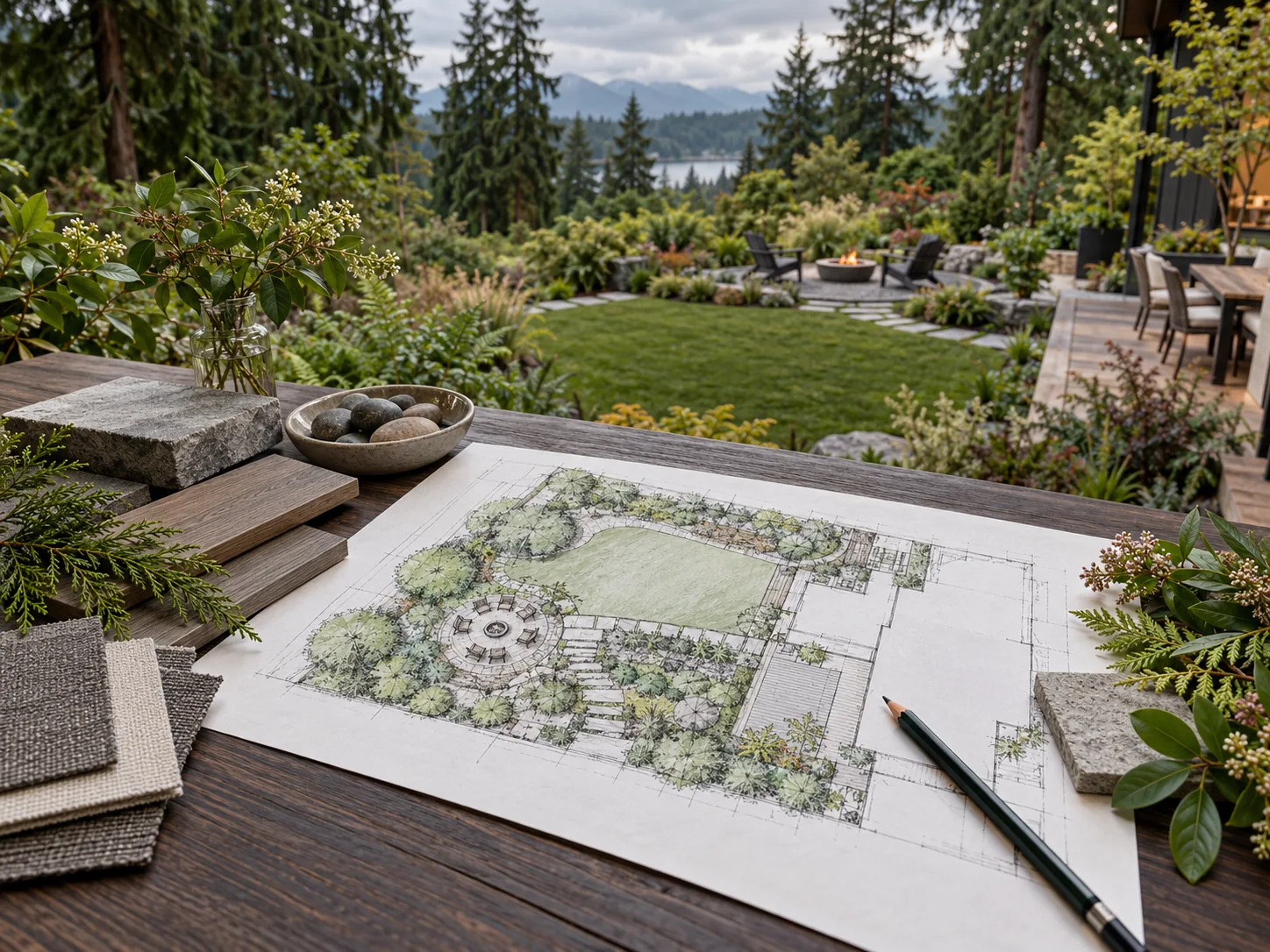
Describe the outcome in plain language
Say what should change in daily life: easier entertaining, safer circulation, privacy, less standing water or more usable lawn. List must-haves separately from nice-to-haves. Include any styles or materials you dislike as well as those you like.
A brief is a decision aid, not a design solution. The team can translate it into layout and construction details.
Record the site you have
Include approximate property size, neighbourhood, photos from each side, sun and shade observations, slope, wet areas, mature trees and access constraints. Existing plans or surveys are helpful if available. Note where the property connects to neighbours and public space.
The more accurately the site is described, the sooner design effort can focus on viable options.
Be open about investment and timing
An investment range helps prioritize features and materials. A start window helps plan design, approvals where needed and construction sequencing. If either is uncertain, say so; uncertainty is easier to handle when it is explicit.
For a large property, identify any work that can be phased and the features that must work together.
Ask what the design will resolve
Discuss proposed layouts, finished elevations, material direction, drainage, planting intent and how the final scope will be priced. The detail required depends on the project.
Explore landscape design and build in Langley and cost factors.
Questions to bring to the first call
- What problem should the landscape solve first?
- What existing elements must stay?
- What decisions should the design package settle?
Have a property in Langley? Tell us about the project and leave your phone number →
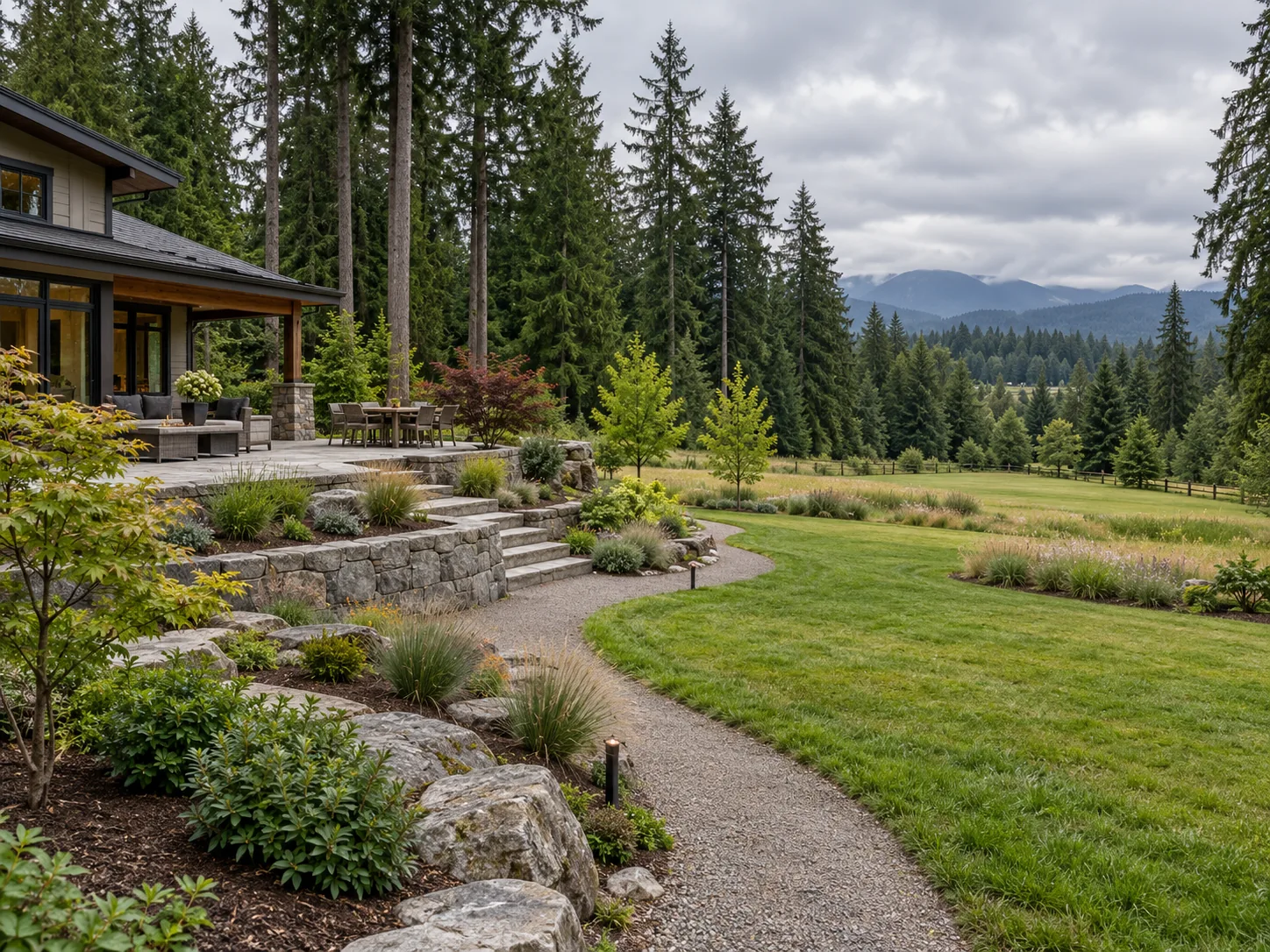 How to phase a large property landscape project
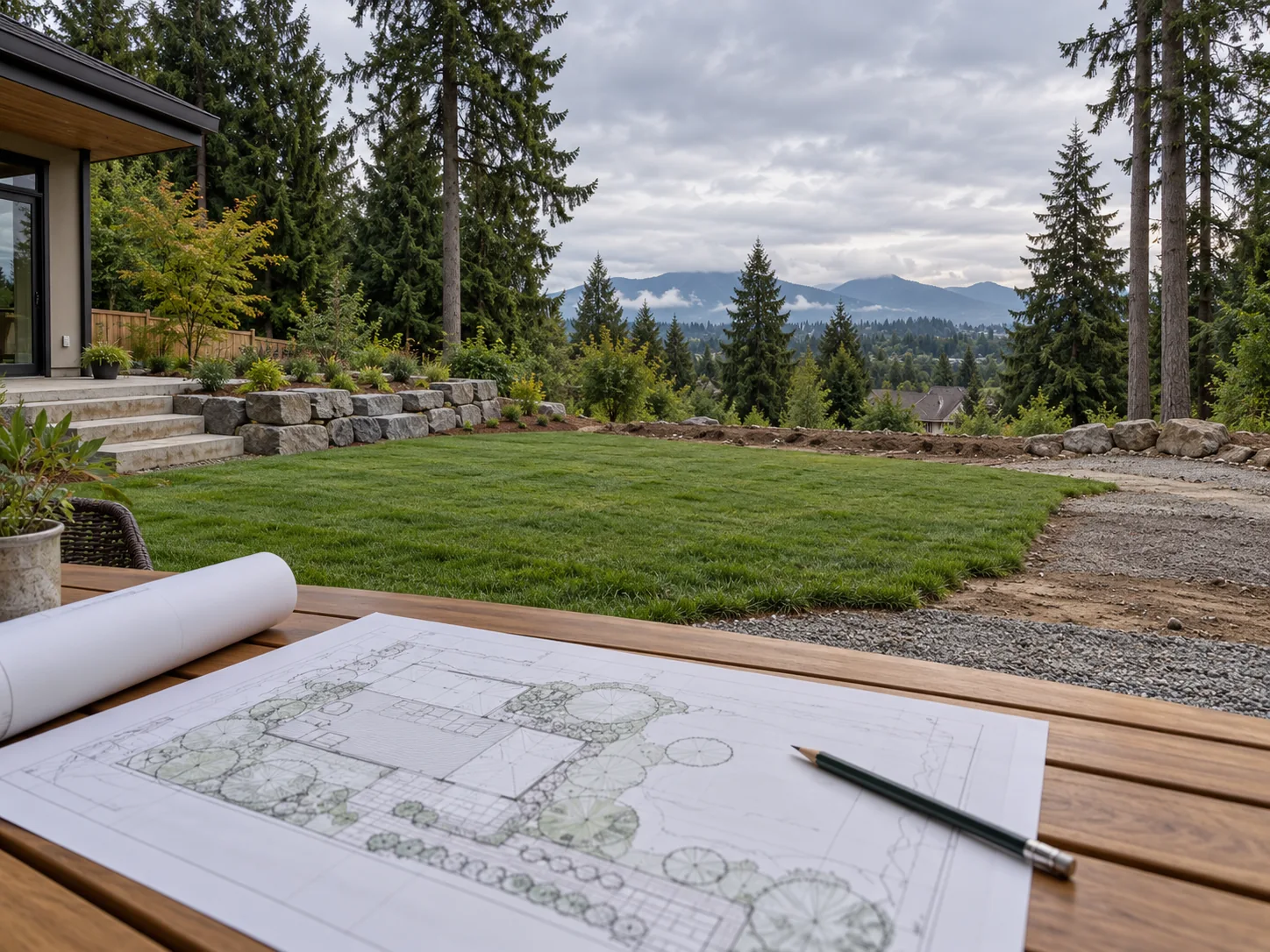 How to plan a complete backyard renovation in Langley
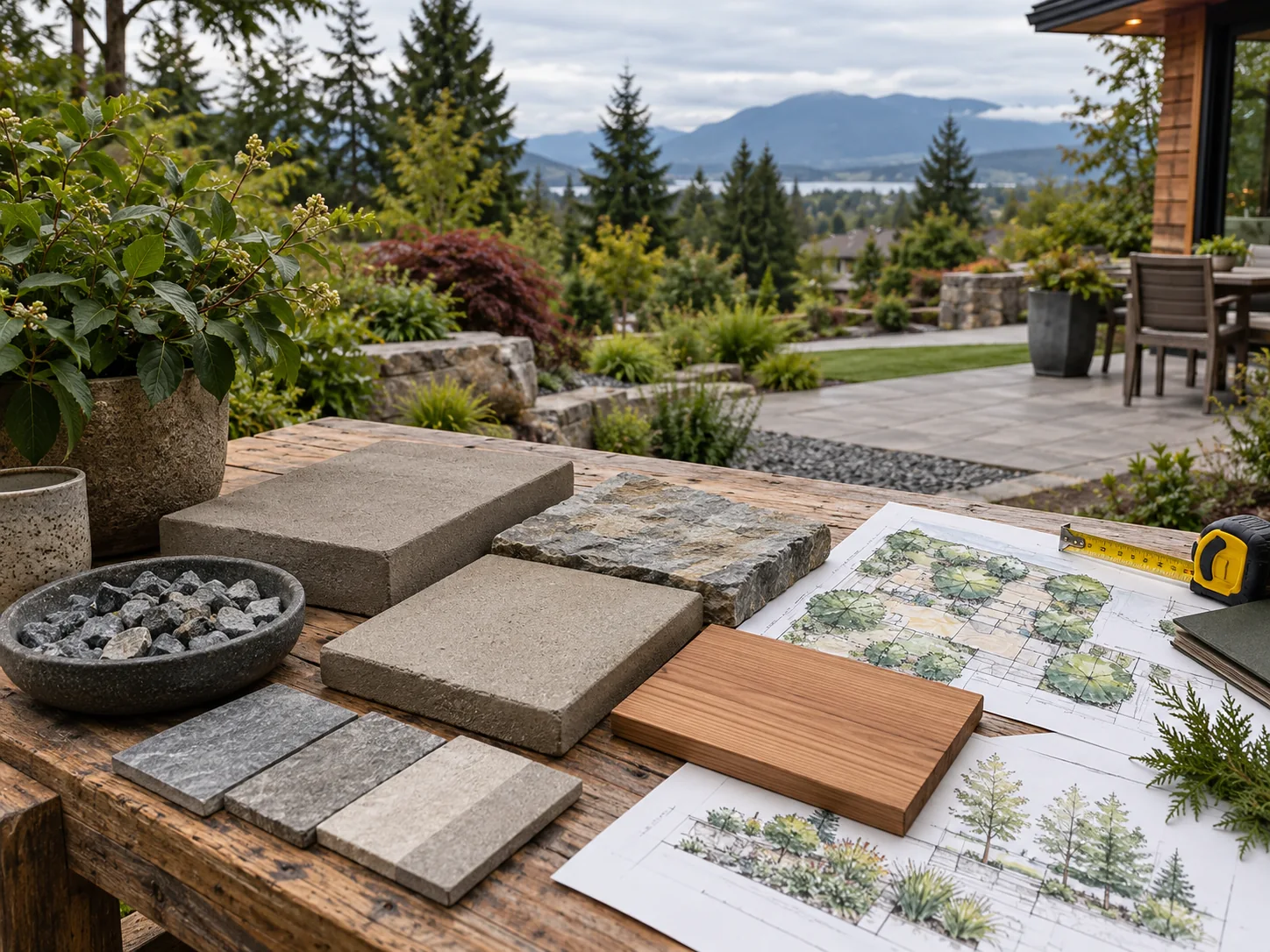 What affects the cost of a large landscaping project?