
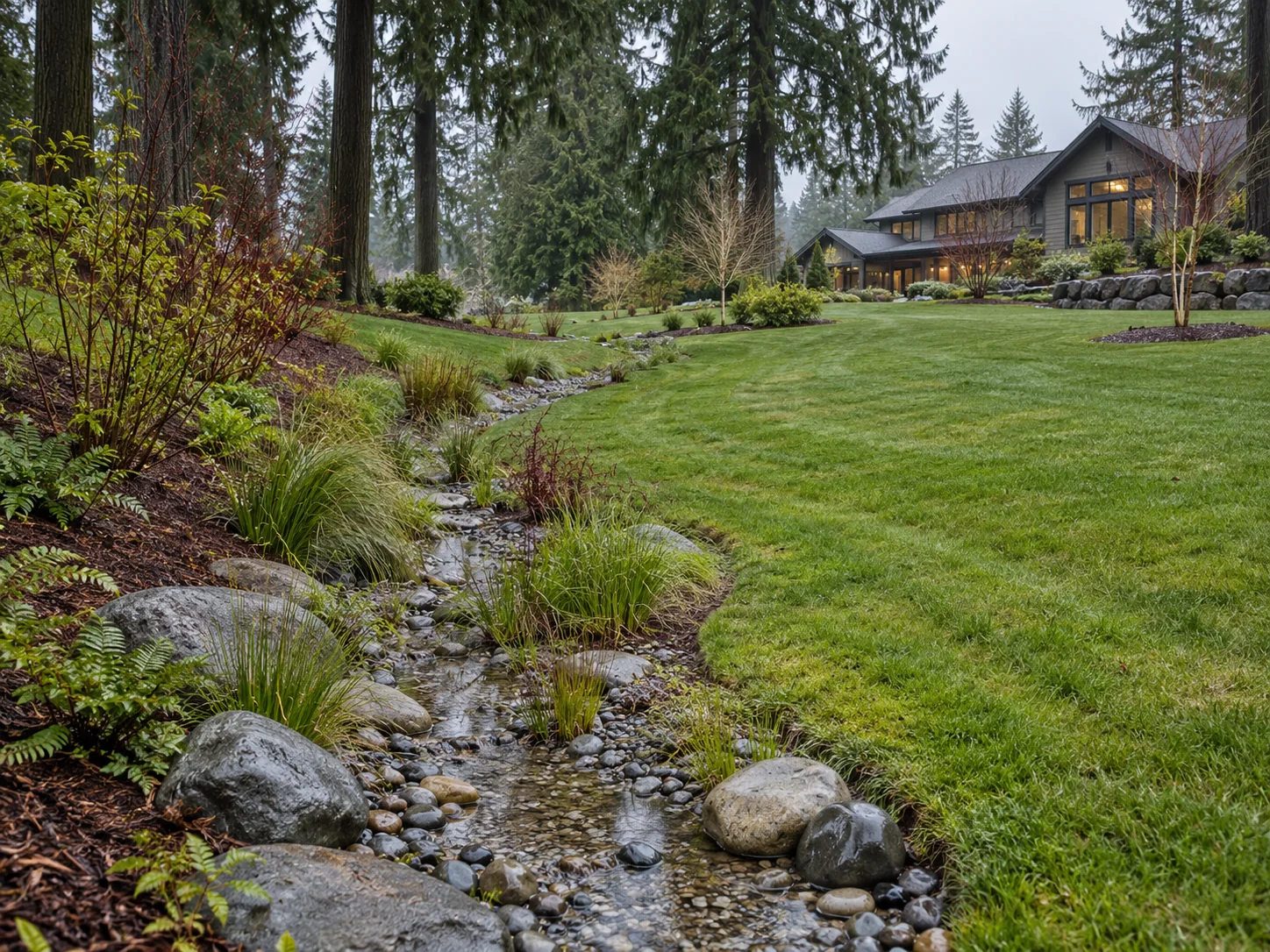
Record when the problem happens
Photograph puddles during rain and again a day later. Note whether water appears beside the house, at the bottom of a slope, near a downspout or in a low lawn area. That pattern gives a contractor a better starting point than a single dry-weather visit.
Mark how long the area stays wet and whether the problem began after a patio, wall or neighbouring grade changed.
Check surface flow first
Look at where roof water exits and which way patios, paths and lawns appear to slope. Water can collect where two surfaces meet or where a hard edge blocks an old route.
Do not assume a drain alone will solve the issue. The outlet and surrounding grades need to make sense as a system.
Consider what is below the surface
Compacted soil, buried debris and different soil layers can influence how long water stays near the surface. A site assessment may reveal several contributing conditions.
If water is close to foundations, existing walls or utilities, explain that at the first consultation so the work can be planned with appropriate care.
Plan the fix before new finishes
Drainage and grading decisions should come before a new patio, lawn or planting bed. Otherwise the finished work may need to be opened again.
See our drainage and grading service and site signs checklist.
For your project call
- Take photos of the site from several angles.
- List the outcomes you want and any problem areas.
- Ask what needs to be decided before a reliable scope can be priced.
Planning work in Langley or a nearby city? Request a free estimate →
 How to compare landscape contractors
 What affects landscaping cost?